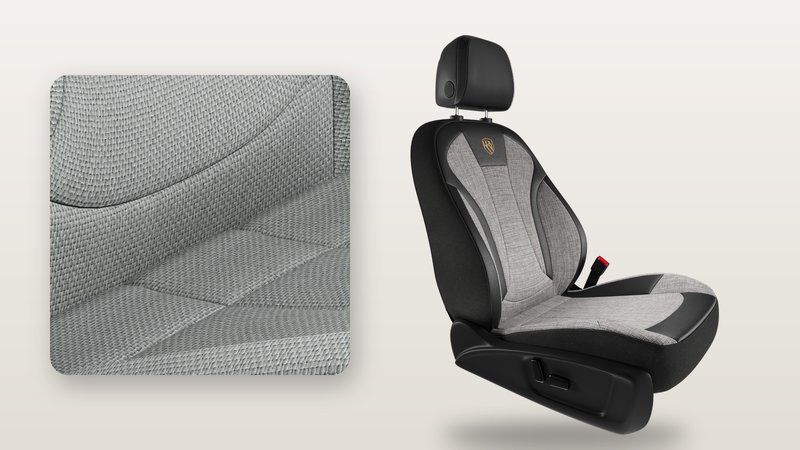
Babyface Seat Covers: Soft Texture and Winter Comfort

On a winter morning, getting into a car that has been outside all night and sitting down on a cold seat is not much fun. Not every car has heated seats, and in those that do, they take a few minutes to warm up. This is where the surface texture of the cover directly determines what you feel on first contact. That is why Babyface is one of the materials we are asked about most in the cold months.
What is Babyface fabric?
Babyface is a fabric whose surface consists of a short, dense pile, with a velvety, soft touch. It takes its name from this softness. Unlike smooth, closed-surface materials, the pile surface has smaller points of contact with the body, so when you first sit down it does not feel like touching a cold surface.
For comparison: according to CFFA, the association of coated fabric manufacturers, PVC-based faux leathers stiffen at low temperatures and adapt slowly to body heat. This is one reason for the coldness you feel when you sit on a leather-look seat in winter.
The difference between plain and embroidered Babyface
- Plain Babyface: A uniform, calm surface. Suitable for those who want a simple, classic interior. The Hüma Series is made this way.
- Embroidered Babyface: A pattern is stitched into the fabric. The pattern adds depth to the surface and helps the fabric sit more neatly on the shape of the seat. The Sport Line Series and the Air File Taç model use embroidered Babyface.
Who is it for?
Babyface is a particularly sensible choice if:
- You live in a cold climate and leave your car in an open car park.
- Your car does not have seat heating.
- You make short trips and set off without waiting for the car to warm up fully.
- You prefer a soft, warm touch to a glossy surface.
For those who spend long hours in the car in summer, more breathable fabrics such as linen or Air File may be more suitable. In the Air File Taç model, an embroidered Babyface centre is combined with breathable Air File fabric to balance these two needs.
Babyface and leather together
In our Babyface models, the fabric sits in the centre of the seat and backrest. The side bolsters, edges and the parts that rub most when getting in and out are made of leather-look material. This keeps the area your body touches soft, while the areas rubbed by hard surfaces such as jeans, shoes or bags are protected by a durable, wipe-clean material.
How to clean a Babyface cover
Pile surfaces are a little more prone to holding dust and hair; on the other hand, with regular care they can look as good as new for a long time.
Regular care
- Once a week, vacuum it with a soft brush attachment.
- For pet hair, a slightly damp rubber glove or a lint roller makes the job easier.
- Always brush in the same direction so as not to disturb the direction of the pile.
When there is a stain
- Blot spilled liquid with a clean, dry cloth without rubbing. Rubbing pushes the stain down to the base of the pile.
- If necessary, add a small amount of mild detergent to lukewarm water, dampen the cloth with this mixture and wring it out well.
- Test any cleaner on a hidden spot first.
- Once dry, lift the pile with a soft brush.
Do not leave the cover wet; the foam layer under the fabric takes a long time to dry.
Choosing a colour in Babyface
Pile surfaces reflect light differently from flat fabrics; the same colour looks slightly deeper and more matte in Babyface. So it is worth bearing in mind that the shade you see on screen may look somewhat darker on the seat. There are some practical points too:
- Dark Babyface (black, anthracite) shows light-coloured pet hair and dust more clearly.
- Light Babyface (beige, light grey) makes the interior feel airy but needs more care against denim dye and stains.
- Mid tones (grey, mink, shades of brown) are the lowest-maintenance options for everyday use.
In embroidered Babyface, the pattern breaks up the uniformity of the colour, which makes small stains and hairs less noticeable.
A few tips to get ready for winter
- Give the cover a thorough vacuum once in autumn; sand and dust that built up over the summer may have settled into the pile.
- On snowy and rainy days, taking off a wet coat before sitting down reduces the moisture the fabric absorbs.
- If the cover gets wet, do not leave the car closed and damp; airing it for a short while prevents bad odours.
About durability
Durability in upholstery fabrics is usually measured with the Martindale abrasion test. In the furniture industry, 25,000-30,000 cycles is cited as the benchmark for heavy domestic use. In daily driving, the part of the fabric that wears most is the side bolsters, which are rubbed as you get in and out. Having leather in these areas is the most practical way to extend the life of the Babyface surface. A proper fit also matters: on a cover that slips and wrinkles, the pile surface keeps folding at the same points and the pile in those areas gradually flattens. On a cover made with a vehicle-specific pattern, this effect is greatly reduced.
Final word
Babyface offers a comfort you will notice every time you get into your car in winter. You can see how to combine Babyface with leather and Lacoste fabric colours on the Design Your Own page, and send us the combination you like via WhatsApp for more information.