Faux Leather Seat Covers: Care and Durability

Leather-look seat covers are very popular because they offer a look close to real leather at a more accessible price and with easier care. But the term "faux leather" covers quite different materials, and without proper care the surface can harden and crack over time. In this article we take a closer look at the material and at what to pay attention to in everyday care.
What is leather-look material?
Leather-look materials are made by applying a polymer coating to a knitted or woven textile backing. According to a bulletin published by CFFA, the association of coated fabric manufacturers, there are two main types:
- PU (polyurethane): The option that most closely resembles real leather in touch, surface feel and the creases that form when it bends. It largely keeps its flexibility at low temperatures and adapts quickly to body heat.
- PVC (vinyl): Offers a durable, moisture-proof surface. It stiffens more in the cold and adapts more slowly to body heat.
Why does faux leather crack or peel?
The same bulletin notes that PU can gradually break down (hydrolysis) when exposed to heat and moisture for long periods, and that this can show up as flaking and brittleness on the surface. It also notes that higher-quality resins, such as polycarbonate-based ones, increase this resistance. In other words, the conditions the material is exposed to determine its lifespan as much as its quality does.
The inside of a car is a demanding environment in this respect. In a study carried out in Arizona, the seat surface in cars left in the sun for one hour reached an average of about 51 °C. When heat, sunlight and sweat come together, the surface wears faster.
Daily and periodic care
Weekly
- Vacuum up crumbs and sand from between the seats; grains of sand wear the surface like sandpaper as you get in and out.
- Wipe the surface with a slightly damp microfibre cloth, then dry it with a dry cloth.
Monthly or when dirty
- Add a small amount of mild liquid soap to lukewarm water. Dampen the cloth with this mixture, wring it out well and wipe the surface.
- Do not let water collect in the seams; water that gets inside the cover struggles to dry.
- Remove soap residue with a clean, damp cloth and dry.
Things to avoid
- Alcohol wipes and solvents: Car detailing sources recommend alcohol-free products for leather-look surfaces. Alcohol and harsh solvents can reduce the flexibility of the coating.
- Real leather products: Some conditioners made for real leather are not absorbed by a coated surface and can leave a sticky film.
- Stiff brushes and abrasive sponges: These can damage the leather grain and sheen of the surface.
- Lots of water: Wiping is enough; there is no need to soak the cover.
Whatever product you use, test it on a hidden spot first.
Is a conditioner necessary?
Real leather is a porous material and needs regular conditioning because it loses its oils over time. On leather-look surfaces, however, the coating does not absorb liquid, so real leather conditioners are generally unnecessary. Some detailing guides recommend using products made specifically for faux leather, containing UV protection, every few months. If you use such a product, apply a small amount, remove the excess with a dry cloth and make sure it does not leave the surface slippery. A slippery seat can be uncomfortable and distracting, especially for the driver.
Why do creasing and stretching matter?
On leather-look surfaces, cracks usually start not in random places but at points where the material is constantly bent and straightened: the front edge of the seat cushion, the top of the side bolsters and where the backrest meets the seat cushion. On a cover that does not fit the seat properly, extra material bunches up in these areas and folds along the same line every time someone sits down. Over time these fold lines leave marks on the surface. On a cover made with a vehicle-specific pattern, the material follows the shape of the seat, so these fixed fold points are reduced.
Small seasonal differences
- Summer: Do not clean the surface while it is hot; let the car cool down in the shade first. On a hot surface, water and soap dry quickly and can leave marks.
- Winter: The material can stiffen slightly in the cold. Rather than getting in and out abruptly and bending the surface excessively before the seat warms up, it is better to wait for the cabin to warm.
- Rainy days: Wipe the surface with a dry cloth after sitting in wet clothes; water left standing in the seams can leave marks over time.
Protecting it from the sun
One of the main factors that wears the surface is prolonged direct sunlight. Parking in the shade whenever possible, putting a sunshade on the windscreen and not leaving the car closed up in the sun for long periods in summer all slow both colour fading and surface hardening.
Combining leather and fabric
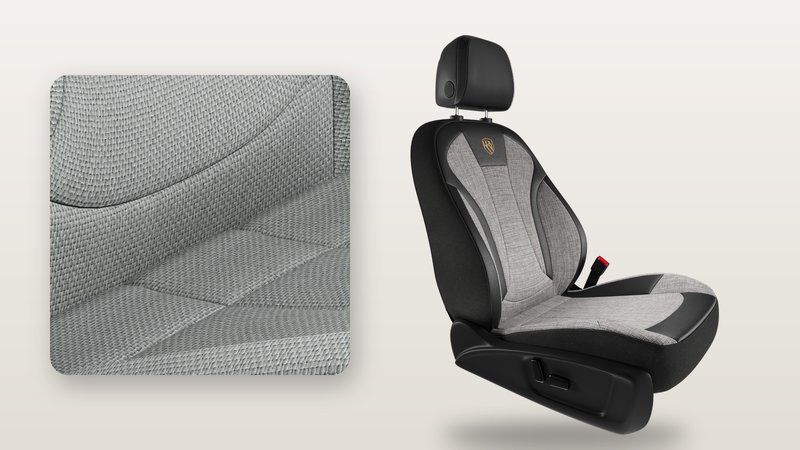
The wipe-clean nature of a leather-look surface is a big advantage, but because it does not breathe it reduces comfort in summer. That is why most of our models use leather on the side bolsters and edges and a breathable or soft fabric in the centre. For example, the 6D Vip Minder Series combines a leather body with a quilted or linen centre, while the Pera Series pairs a leather body with Pera fabric.
Final word
Regular, gentle care noticeably extends the life of a leather-look cover. If you would like to combine leather and fabric colours to your own taste, you can use the Design Your Own page, and send us any questions about materials or care via WhatsApp.